Six Ways to Level Up Your Zero Waste Lifestyle
In this article, we explore six ways to level up your zero-waste lifestyle.
When discussing climate change and environmental impact, the conversation often centers on recycling, plastic bags, or using reusable bags at the grocery store. Those are good places to start. But if we stop there, we’re missing the bigger picture. Let’s be honest, we can try to change the world by addressing issues that are far off, or we can make the decision to start with ourselves. In this article, we will explore how to create a circular economy right in your own home.
In a circular economy, raw materials and natural resources are kept in use for as long as possible. That means less waste, fewer single-use items, and a real dent in plastic waste and carbon emissions. It’s not about being perfect; it’s about finding small actions in your daily routine that reduce waste generation and make a more sustainable lifestyle possible.
Here are some of the ways I try to close the loop in my own home.
1. Compost instead of recycling
The best way to create a zero-waste lifestyle is to think beyond recycling. While recycling is commendable and preferred over throwing items in the trash, a significant amount still cannot be recycled. We want to consider what is compostable or, better yet, reused until it’s no longer needed. Take cardboard boxes, for example. Instead of recycling them, I use them as sheet mulch for my garden beds, and they break down into the soil, enriching it. Most people toss their toilet paper rolls in the recycling bin. I tear them up and put them in my compost pile, enriching my soil instead of having them shipped off for processing. Paper egg cartons and shredded junk mail have the same story. Returning these to the earth is a great way to reduce waste with minimal effort.
*A caveat is that not all paper or cardboard should be returned to the earth. Those coated with PFOAS or other chemicals should not be added to the soil.
2. Use every bit of your food
Food waste is one of the biggest issues in the United States, and meal planning can only go so far. Here are just a couple of ways to use every bit of your food:
- Save fruit scraps for use in vinegar, homemade cleaners, or as a flavoring for a fermented drink. You can freeze scraps in a reusable bag and save them for when you are ready to use them.
- Collecting veggie scraps in a freezer bag to make fresh food taste amazing in a broth.
- Use the entire chicken. Roast it, make soup, turn the bones into broth, then dry and crush them for homemade bone meal.
- Make meals from what you have. Avoid buying ingredients for one dish that will go bad before you can use them again.
- Tomato skins, which often end up in the trash during canning season, can be dehydrated and ground into a flavorful powder for soups and sauces.
There are many other scrappy ways to get more from your food. I like to use Plant You as a resource.
3. Save your seeds
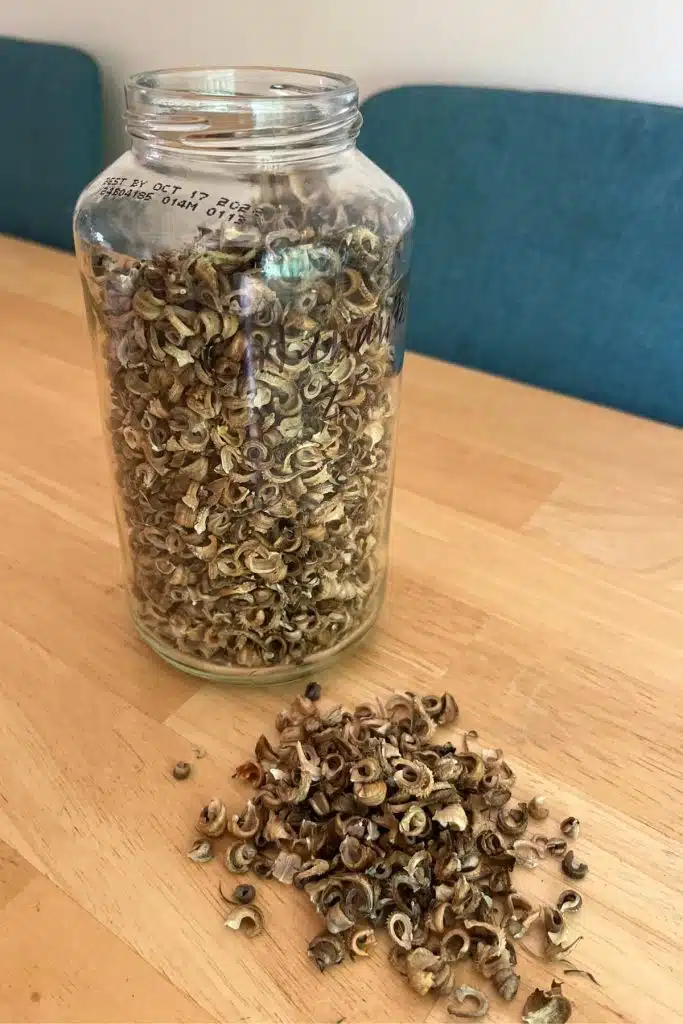
Seed saving is part of the zero-waste movement that connects us directly to future generations. By saving seeds from my garden, I’m not only avoiding plastic packaging from bulk stores or nurseries, but I’m also contributing to a more resilient food system. This is a zero-waste approach with a huge long-term impact.
I planted 7 calendula plants this year, and look at the seeds I’ve saved so far! If I planted all of these, it would continue to multiply exponentially. That’s true abundance. And after the first seed purchase, it’s free! Now I pass seeds on to folks so that they can do the same thing.
4. Repurpose and reuse
This post contains affiliate links, which means I may earn a commission from qualifying purchases at no extra cost to you. See my full disclosure here.
Single-use items may be convenient, but they come at a cost in terms of plastic waste and environmental impact. Instead, I look for sustainable practices that fit into my everyday life:
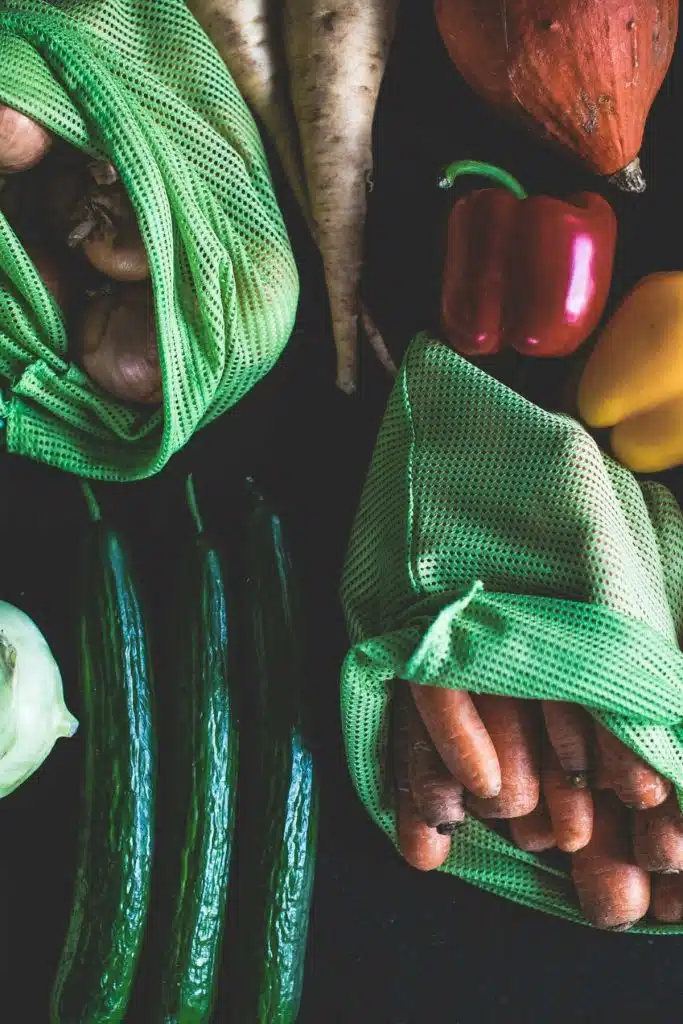
- Cloth bags, food hugger, and beeswax wrap instead of plastic bags and cling wrap.
- Reusable containers for leftovers, bulk store purchases, and fresh food storage.
- Old towels and sheets are cut into cleaning rags or used as pet bedding
- Candle stubs are melted down to be the start of a new candle.
- Recently, a pair of pants developed a hole in them, and I pulled out the drawstring to use as curtain ties. The pants were then cut up to serve as garden slings for my squash.
These little waste swaps may not solve global warming, but they are a great way to reduce plastic waste and keep raw materials in use longer. Plus, you get to use your imagination and get creative!
5. Repair rather than buy new
This is a biggie. How many times do we buy something cheap to say, “Oh well, if it breaks, I can just throw it out and get a new one.” Think quality over quantity. I’d rather buy something of great quality at a higher price that I only have to buy once, rather than buy something cheap that I have to replace often.
Mend your clothing. Darning your socks. Heck, make your own grocery bag out of an old T-shirt. Go crazy! And it’s not just about clothing. Electronics can be repaired, eyeglasses, you name it.
6. Shop thrift and give your stuff away
Shopping second-hand is a fantastic way to contribute to reducing the impact on the supply chain. Use what is already in circulation. I love going to garage sales and have found some wonderful pieces that have become my treasures. And for cheap! On the other hand, if you truly no longer want something, find someone who does. I had some old jewelry that had seen better days, so I gave it to some neighbor kids, and they absolutely love it!
Closing Thoughts
In a culture where buying new has never been easier, we have to resist the urge to consume. When you make a purchase, ask yourself where it will end up when you no longer want it, need it, or have use for it. If the answer is the trash or recycling bin, perhaps think twice before making that purchase. Our small actions matter. Every time we say no to plastic packaging, use up our fresh food instead of tossing it, or return paper and scraps back to the earth, we’re shaping a more sustainable future.
It’s not lost on me that my affiliate links here are to Amazon. Although I’d love to have links to each item from sustainable brands, I’m just not there yet. However, shopping locally and buying from brands that truly prioritize the environment and social justice is significantly better. Nobody is perfect, and if you try to be, you’ll end up doing nothing. So just take a step. I hope this list helps you in your journey toward a waste-free future.