How to Season Cast Iron
In this post, we will discuss how to season cast iron in your kitchen using three methods.

What is Seasoning Cast Iron?
Seasoning simply means sealing oil or fat into the poor of the iron. It includes heating up the cast iron and spreading an even layer of oil over the hot surface.
Oven Method
When you first purchase your cast-iron piece, and perhaps periodically after that, it’s important to ensure it has a good layer of seasoning. If you buy new, the pans typically come pre-seasoned, but often need more to make them non-stick. Some people will strip a new cast-iron pan first and then season it from scratch. This is due to the use of commercial oils. Others just layer more seasoning on top of what is already there. You’re call. The oven method is great for new or aged cast iron. Here is what you do:
- Preheat your oven to 500°F
- Put a tiny bit of oil on a cloth or paper towel and spread it all over the cast-iron pan.
- Put the pan upside down on a baking sheet and bake for about an hour.
- Take the pan out of the oven, let it cool.
- Repeat this as many times as needed to achieve a glossy finish on your pan. Be sure to let it cool in between so the oil can soak in.
Bacon Method
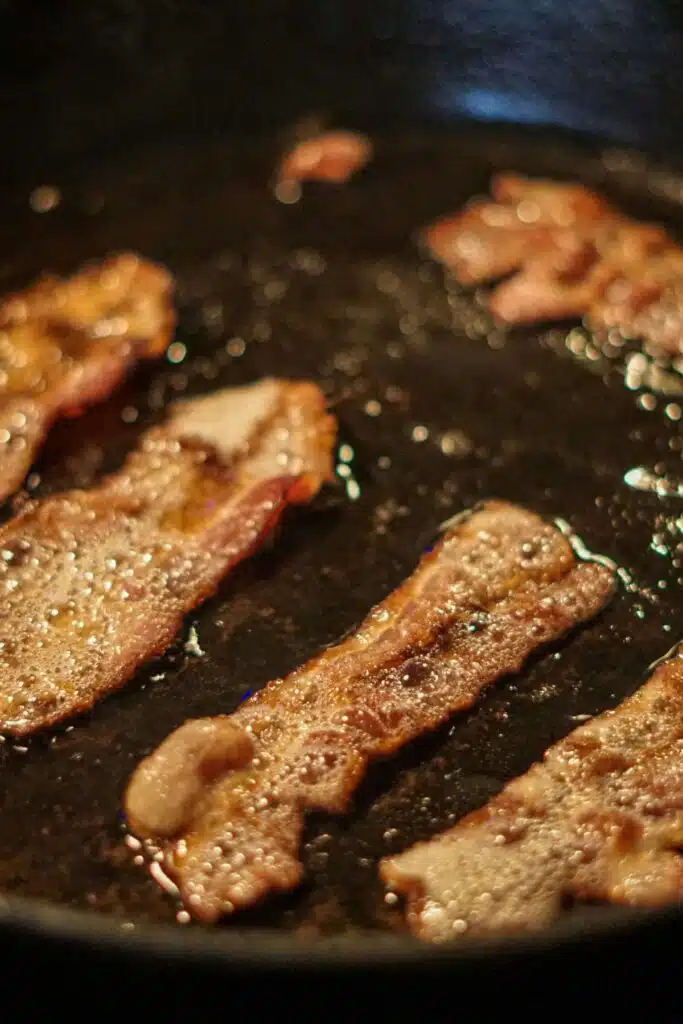
This one might be great if you’re vegan, but it does a nice job for those who love bacon. This is another method that works well when you have a brand-new cast iron pan and either want to strip and re-season, or just add more layers.
- Get your pan hot on the stovetop
- Cook bacon like usual
- Remove bacon from the pan once cooked
- Wipe out the grease from the pan until only a very thin layer remains.
- Feel free to season even the non-cooking surfaces of the pan (handle, sides, and bottom) to help prevent rusting.
- Let the pan cool. If you decide you want more seasoning layers, repeat this process, provided the bacon doesn’t run out 🙂
Stovetop Method
This method is great for daily maintenance and is quite simple.
- Hand-wash it with soap and water like you normally would your dishes. Soap and water aren’t a problem as long as they’re rinsed off quickly. The soap could strip the oil, but again, it is unlikely if you rinse it right away.
- Once the pan is clean (make sure there is no debris left), set it on the stovetop and turn on the burner to medium-high. You want the pan to dry quickly, as water can rust the cast iron. Placing it on a stovetop helps to do just that.
- Now that your pan is hot and dry, add a pearl-sized amount of oil and spread it into a very thin layer with a cloth or paper towel. Less is more with this. You can always add extra oil if needed, but a little goes a long way.
- Once the oil is spread around, turn off the burner and let it cool before putting it away.
I learned that it’s best to wash the pan sooner rather than later, as food can get crusted on it. The less scrubbing you have to do, the better it preserves the seasoning.
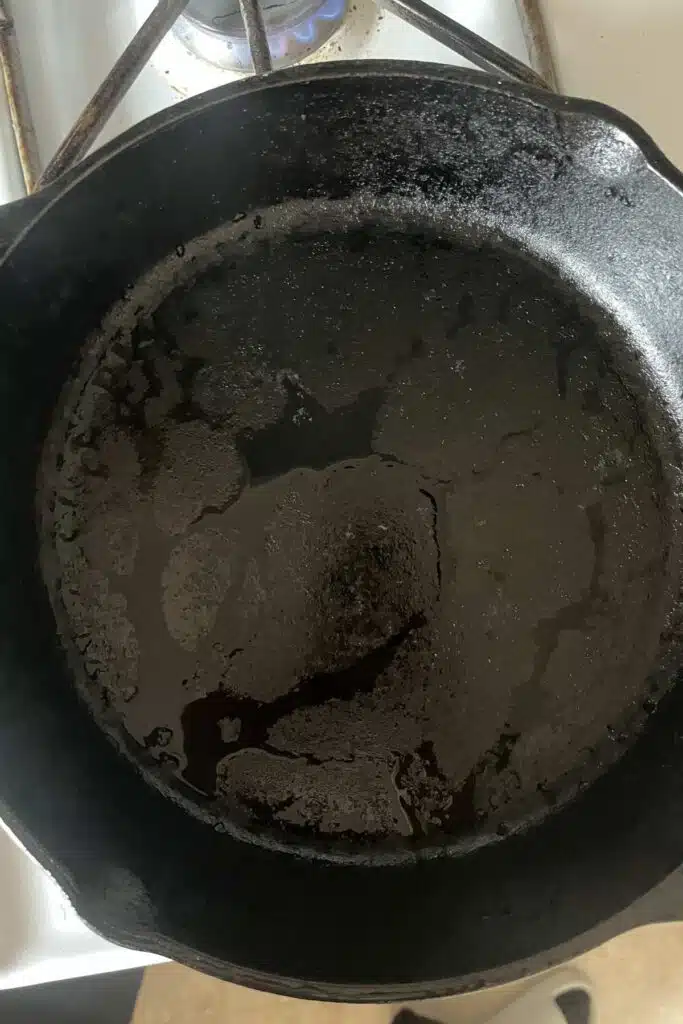
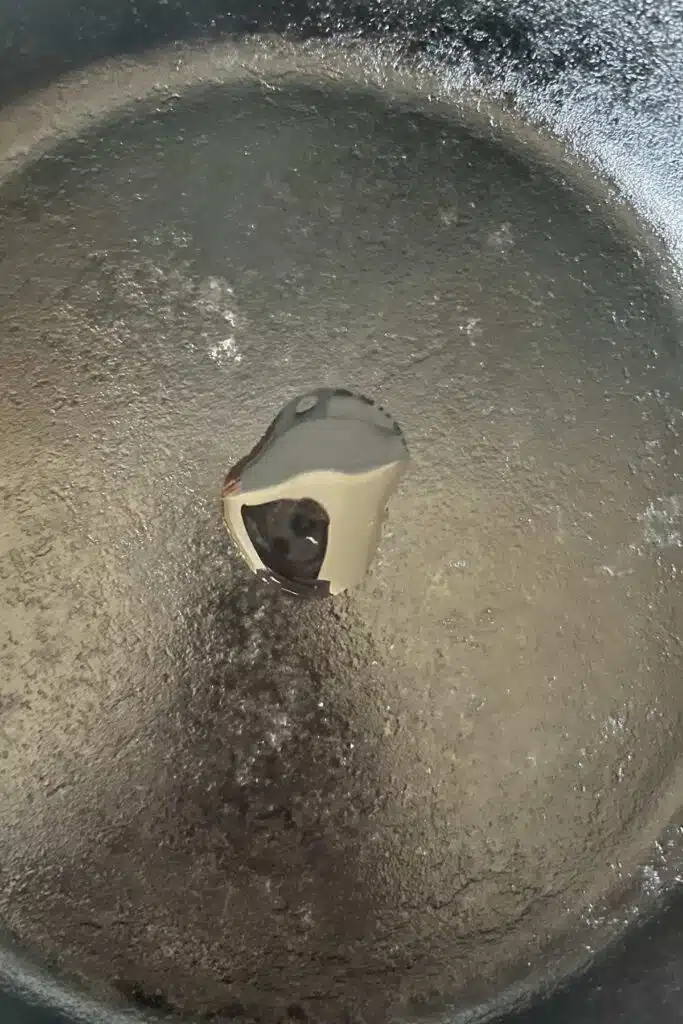
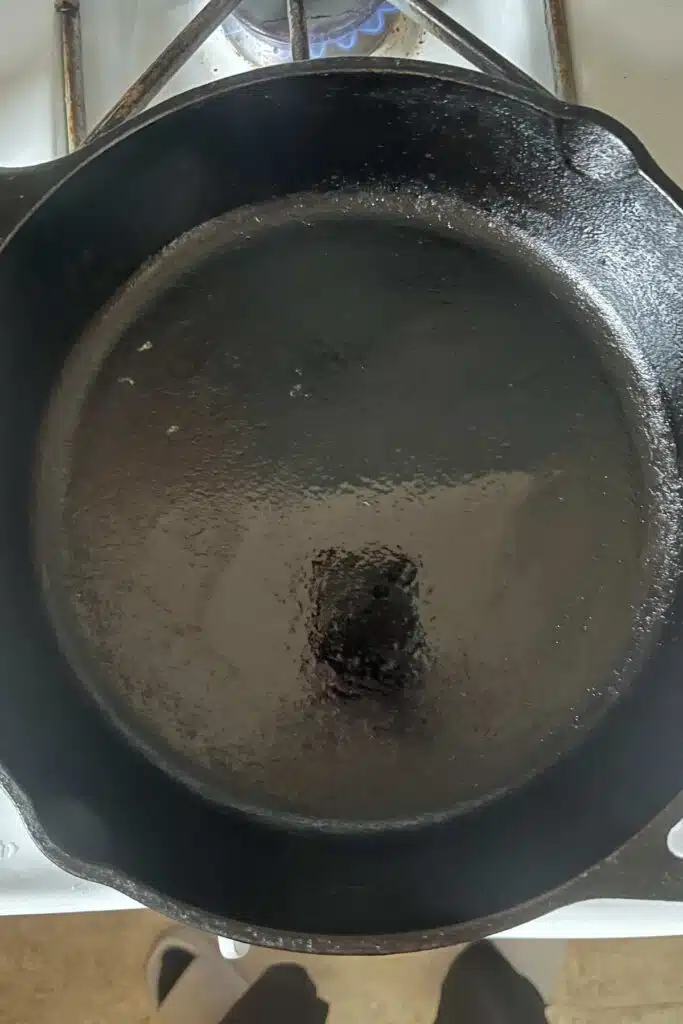
You can see that our skillet needs some work by the carbon buildup (a bit of a rough texture). A lot of new pans come like this. This summer, we are going to throw all of our pieces into a bonfire and re-season them from scratch to achieve a smoother finish. I will keep you posted on how that goes. I will also post more about oil in the near future. There is a lot of discussion (and opinions) out there about which oils to use.
For the oven method, I use avocado oil because of its higher smoke point. For the stovetop/daily method, I use olive oil because the pan doesn’t get quite as hot (olive oil has a lower smoke point).
I am not an expert in this by any means, but this is how we do it at our house, and it seems to work well. We don’t have sticking problems, which is the main goal with seasoning.
I hope this helps! Let me know in the comments 🙂